Inside Our Straw Bag Workshop: Cutting, Heat-Transfer Printing and Sewing
Most sourcing guides describe bag production in the abstract. This page shows the actual floor: how fabric panels are cut, how artwork is applied by heat-transfer printing, and how the bags are sewn, checked and packed.
These are recent photos from our workshop in China. They show the three steps that matter most for custom woven and canvas bags — and the points buyers should verify before placing a bulk order.
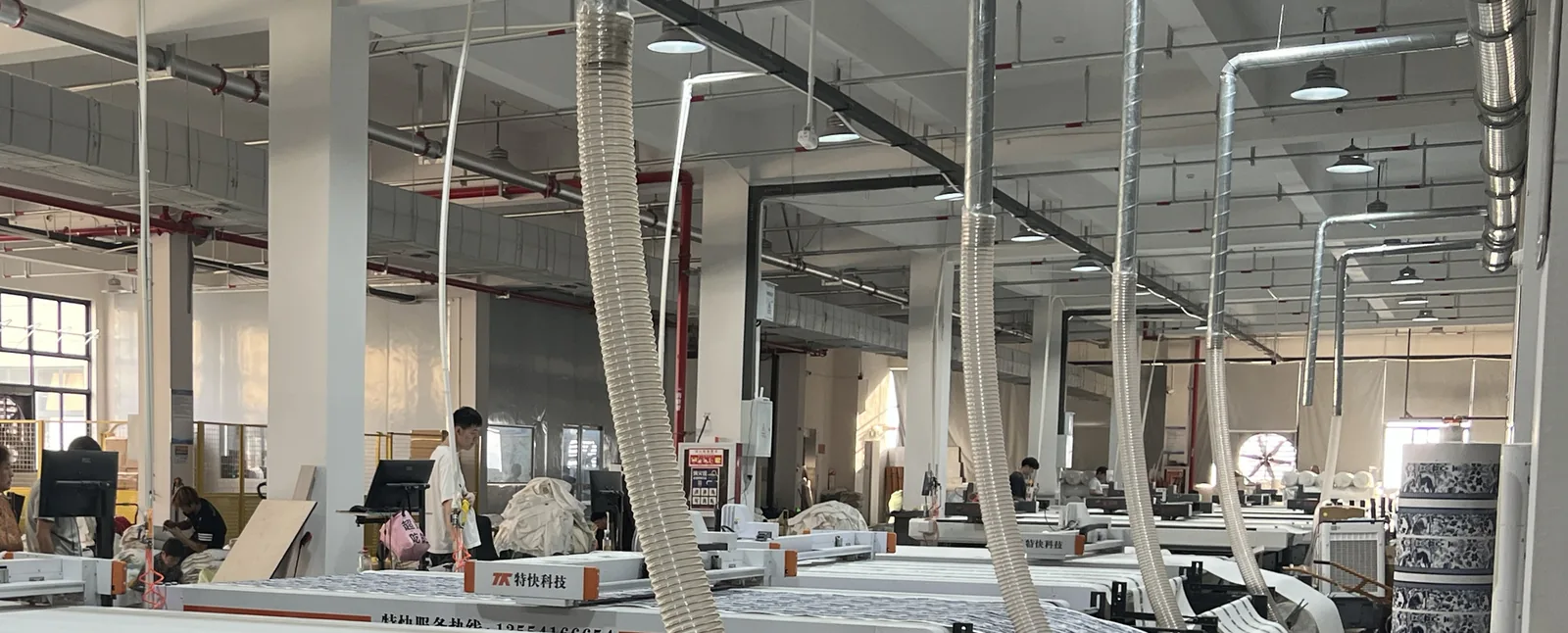
Step 1: Fabric cutting
Every order starts with the fabric and the pattern. For woven straw bags, panels are cut from natural fiber sheet or woven fabric; for canvas bags, the panels are cut from 12oz poly-cotton canvas or another specified fabric. The cutting line uses a digital pattern to keep shapes, handles and linings consistent from the first piece to the last.
Before cutting, the fabric is checked for width, shade and visible defects. During cutting, panels are grouped by style and size so the sewing line receives a complete set rather than a mixed pile. This is also where nesting and layout decisions affect material yield — a small change in pattern layout can reduce waste on a large order.
What to ask a supplier: Is cutting done in-house? How do you control shade variation between rolls? Can you send photos of the cut panels before sewing?
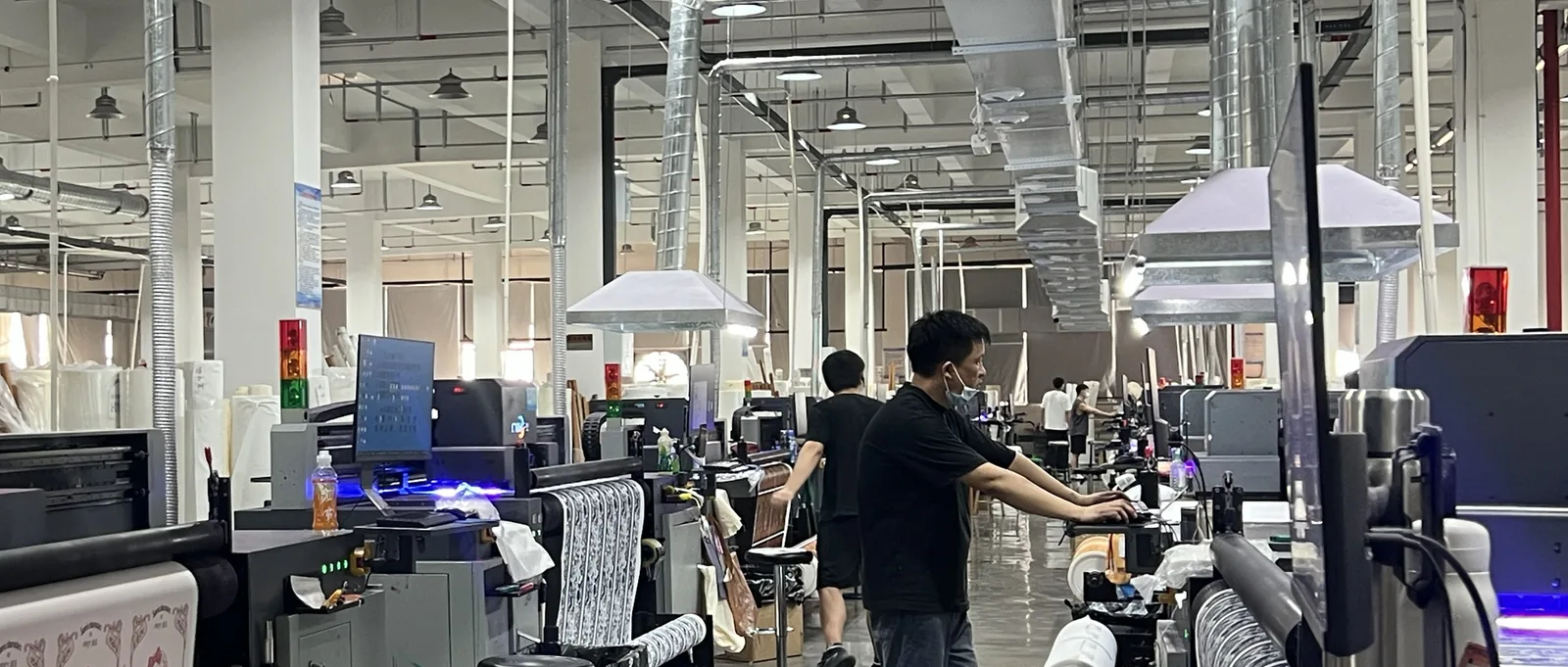
Step 2: Heat-transfer printing
Heat-transfer printing is a two-step process. First, the artwork is digitally printed onto transfer paper or film. Then the printed transfer is placed on the canvas or dyed fabric and heat-pressed so the image bonds to the surface. It is different from direct digital printing, where the printer applies ink directly to the fabric.
Heat transfer is well suited to multi-colour artwork, small and medium runs, and designs that need a sharp, uniform image. It can be applied to canvas totes, cotton bags and selected woven fabrics. The final hand feel, stretch and colourfastness depend on the fabric, the transfer film and the ink system, so the print method should be confirmed against your artwork and your wash or use requirements.
For buyer confidentiality, we do not show customer artwork in close-up on this page. If you need to see print quality, we can send a sample or a close-up of a non-confidential test print.
What to ask a supplier: Which print method will you use for my artwork? Can you provide a wash or rub test? What is the minimum order for this print method? Will the print change the feel of the fabric?
Step 3: Sewing and finishing
Cut and printed panels move to the sewing floor, where industrial machines assemble the body, handles, lining, pockets and hardware. Different lines handle different constructions: flat-weave totes, crochet bags, canvas totes and lined styles each have their own sequence and machine settings.
Sewing is also where most visible quality issues appear. Operators check seam alignment, stitch density, handle attachment, lining fit and hardware security at each station. A final inspection checks the finished bag against the approved sample: dimensions, colour, print position, logo placement, cleanliness and packing.
What to ask a supplier: Which steps are in-house and which are subcontracted? What is checked at each station? Can I see the approved sample before bulk production starts?
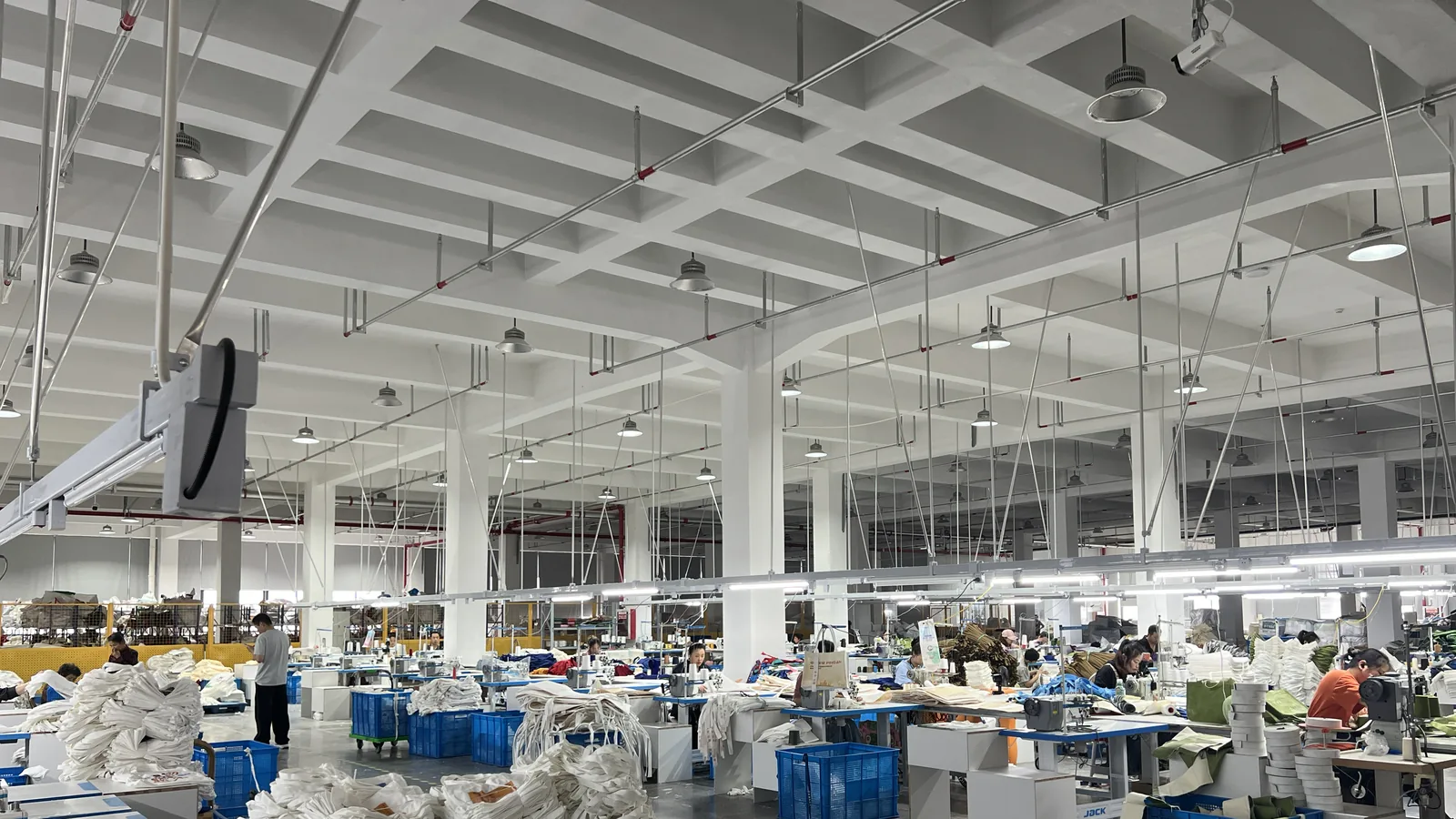
Why one-roof production matters
When cutting, printing and sewing are coordinated in one workshop, problems are caught earlier. A print position that does not match the cut panel, a handle that is slightly short, or a shade difference between rolls can be corrected before the goods are packed. Fewer handoffs also mean clearer responsibility and faster answers when something changes.
That does not mean every component is made in the same building. Weaving, metal hardware, labels and some specialty finishes may come from specialist suppliers. The useful question is not “is everything in one building?” but “who owns quality control at each handoff?”
What to check before you place an order
- Ask for current production photos or a video call. A factory that is proud of its floor will show it.
- Confirm the print method in writing. Heat transfer, direct digital printing, screen printing and embroidery are not interchangeable.
- Approve a physical sample. Check print position, colour, hand feel, seam quality and handle strength before bulk production.
- Agree the inspection points. Ask what is checked after cutting, after printing and before packing.
- Confirm what is in-house. Ask which steps are subcontracted and who is responsible for quality at each step.
Planning a custom bag order?
Send us your artwork, target quantity and destination. We will confirm the right print method, sampling plan and production schedule for your project.
Request a quote and sample — we export to Europe, the Americas, the Middle East and Southeast Asia.
Further reading: How Straw Bags Are Made: Process, Quality & What Buyers Should Check · Seagrass vs Raffia vs Paper Straw vs Water Hyacinth · Custom Canvas Bags